Vegetable names in English (list of vegetables)
Learn more than 40 vegetable names in English, grouped into fruit, root, leafy and green vegetables, with meanings, examples and picture charts.
In this lesson
Vegetable names in English include everyday words such as potato, onion, carrot and cabbage, and less familiar ones such as kohlrabi and okra. This list groups more than 40 vegetables into fruit vegetables, root vegetables, leafy vegetables and green vegetables, with simple meanings, example sentences and picture charts.
Key point
Learn vegetables in groups by the part of the plant we eat: the fruit or pod, the root, or the leaves. Some vegetables have different names in British and American English.
What are the main types of vegetables?
We have divided the list into four groups to make it easier to study:
- Fruit vegetables: the part of the plant that holds the seeds.
- Root vegetables: parts that grow under the ground.
- Leafy vegetables: plants we grow for their leaves.
- Green vegetables: green stems, pods, flower heads and leaves.
Some vegetables, such as cabbage, cucumber and lettuce, appear in more than one group.
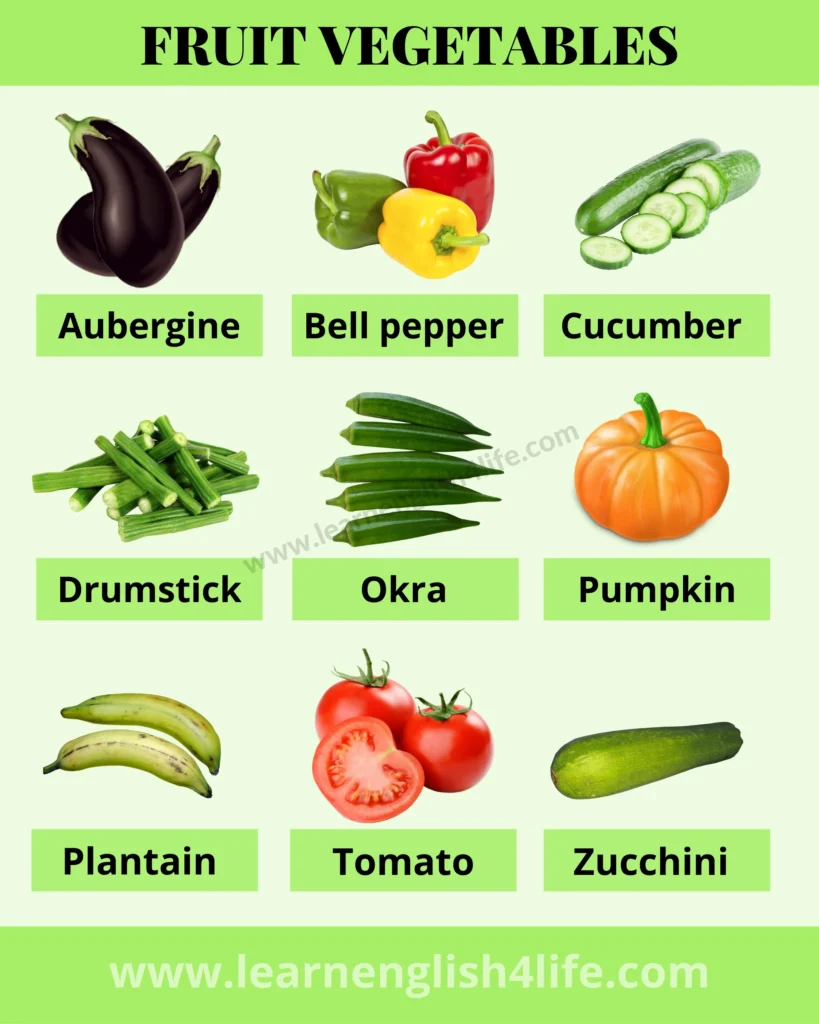
Fruit vegetables
| Word | Meaning | Example |
|---|---|---|
| aubergine | A vegetable with smooth, shiny purple skin (US: eggplant). | My mother makes a sweet aubergine curry. |
| bell pepper | A hollow, sweet pepper that can be red, green or yellow. | Cut the red bell pepper into thin slices. |
| cucumber | A long, green vegetable that people often eat raw in salads. | I put cucumber in my salad. |
| drumstick | The long, thin green pod of the moringa tree, cooked in curries. | We cooked drumsticks in a coconut milk curry. |
| okra | A green pod with small seeds inside, also called ladies’ fingers. | Fried okra is crispy and tasty. |
| pumpkin | A large, round vegetable with orange skin and flesh. | Pumpkin curry is sweet and creamy. |
| plantain | A fruit like a large banana that is cooked before eating. | We fried some plantain for dinner. |
| tomato | A soft, round, red vegetable used in salads and sauces. | Slice the tomatoes for the salad. |
| zucchini | A long, green vegetable like a small marrow (UK: courgette). | Zucchini is easy to grill. |
Note
Tomatoes, cucumbers and pumpkins are fruits in science because they grow from flowers and contain seeds. In cooking and shopping, we call them vegetables.
Root vegetables
| Word | Meaning | Example |
|---|---|---|
| beetroot | A round, dark red root vegetable (US: beet). | Beetroot turns the curry a deep red colour. |
| carrot | A long, orange root vegetable. | I grate carrots for the salad. |
| cassava | A long root with brown skin and white flesh, cooked before eating. | Boiled cassava tastes good with coconut sambol. |
| daikon | A large, long white radish, also called mooli. | Daikon is often used in Japanese cooking. |
| garlic | A plant with a strong smell and taste, used to flavour food. | Add two cloves of garlic to the pan. |
| ginger | A root with a hot, strong taste, used in cooking and drinks. | I drink ginger tea when I have a cold. |
| onion | A round vegetable with layers and a strong smell. | Cutting onions makes my eyes water. |
| potato | A root vegetable with brown or red skin and white flesh. | We had potato curry with bread. |
| radish | A small, round, red or white root with a hot taste. | Radishes add a crunchy taste to salads. |
| shallot | A small onion with a mild taste. | Chop the shallots finely. |
| spring onion | A young onion with a long green stem (US: scallion). | Sprinkle chopped spring onions on the noodles. |
| sweet potato | A root vegetable with orange or white flesh and a sweet taste. | Roasted sweet potato is soft and sweet. |
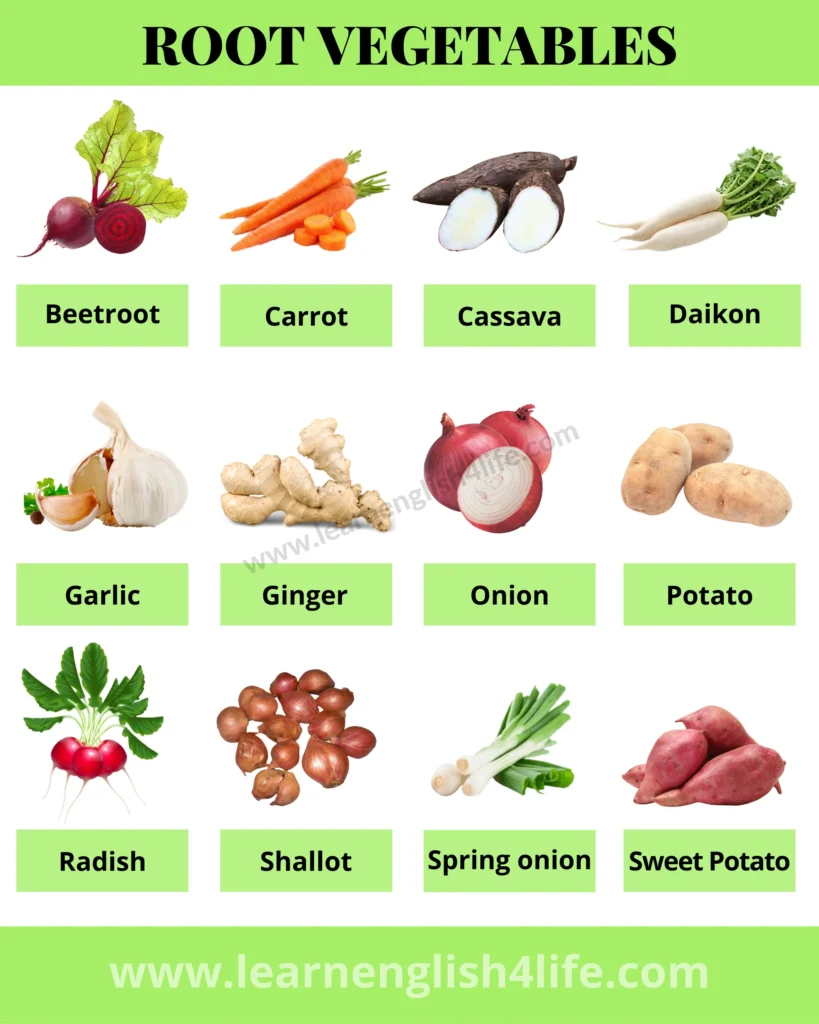
Garlic, onions and shallots are bulbs, and ginger is a stem that grows under the ground, but cooks usually group them with root vegetables.
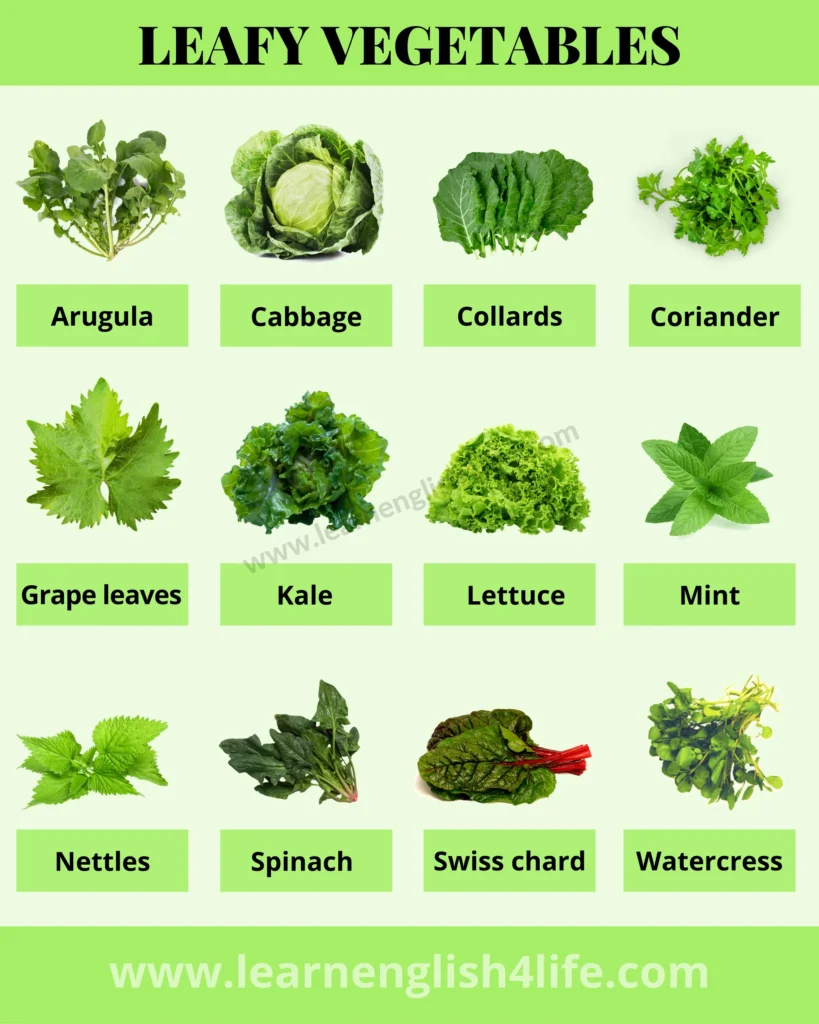
Leafy vegetables
| Word | Meaning | Example |
|---|---|---|
| arugula | A salad leaf with a peppery taste (UK: rocket). | Arugula gives the salad a peppery taste. |
| cabbage | A large, round vegetable made of thick green or purple leaves. | Cabbage is cheap and easy to cook. |
| collards | Large, dark green leaves cooked as a vegetable, also called collard greens. | Collards are popular in the southern United States. |
| coriander | A herb with fresh green leaves and seeds used in cooking. | Add fresh coriander to the soup. |
| grape leaves | The leaves of the grape vine, often filled with rice (UK: vine leaves). | My friend filled grape leaves with rice and herbs. |
| kale | A dark green cabbage with curly leaves. | Kale is often added to smoothies. |
| lettuce | A plant with large green leaves eaten raw in salads. | Wash the lettuce before you make the salad. |
| mint | A herb with fresh-smelling leaves. | Mint leaves make a refreshing drink. |
| nettle | A wild plant with stinging leaves that can be cooked and eaten. | Wear gloves when you pick nettles. |
| spinach | A vegetable with dark green leaves. | I cook spinach with garlic. |
| Swiss chard | A leafy vegetable with large leaves and colourful stems. | Swiss chard can have red or yellow stems. |
| watercress | A small plant with round, peppery leaves that grows in water. | Watercress makes a fresh, peppery salad. |
Common mistake
I ate a spinach for lunch. → I ate some spinach for lunch.
Spinach, kale and garlic are usually uncountable, so we use some or a lot of, not a.
Green vegetables
| Word | Meaning | Example |
|---|---|---|
| artichoke | A round green vegetable with thick leaves; you eat the soft parts. | We ate the soft heart of the artichoke. |
| asparagus | A vegetable with long, thin green stems. | Steamed asparagus is soft and tasty. |
| bitter gourd | A green vegetable with bumpy skin and a bitter taste. | Bitter gourd tastes bitter, but many people love it fried. |
| broccoli | A green vegetable with a thick stem and small flower heads. | Broccoli cooks quickly in boiling water. |
| cabbage | A large, round vegetable made of thick green or purple leaves. | Cabbage salad is quick to make. |
| celery | A vegetable with long, pale green stems. | Celery is crunchy and fresh. |
| cucumber | A long, green vegetable that people often eat raw in salads. | Cucumber slices feel cool on a hot day. |
| green bean | A long, thin green pod eaten as a vegetable. | Green beans cook quickly. |
| kohlrabi | A round, pale green vegetable from the cabbage family. | Kohlrabi tastes a little like cabbage. |
| leek | A long vegetable like an onion, with white and green parts. | Leek and potato soup is warm and filling. |
| lettuce | A plant with large green leaves eaten raw in salads. | Put some lettuce in the sandwich. |
| pea | A small, round green seed that grows in a pod. | Peas are small, sweet and green. |
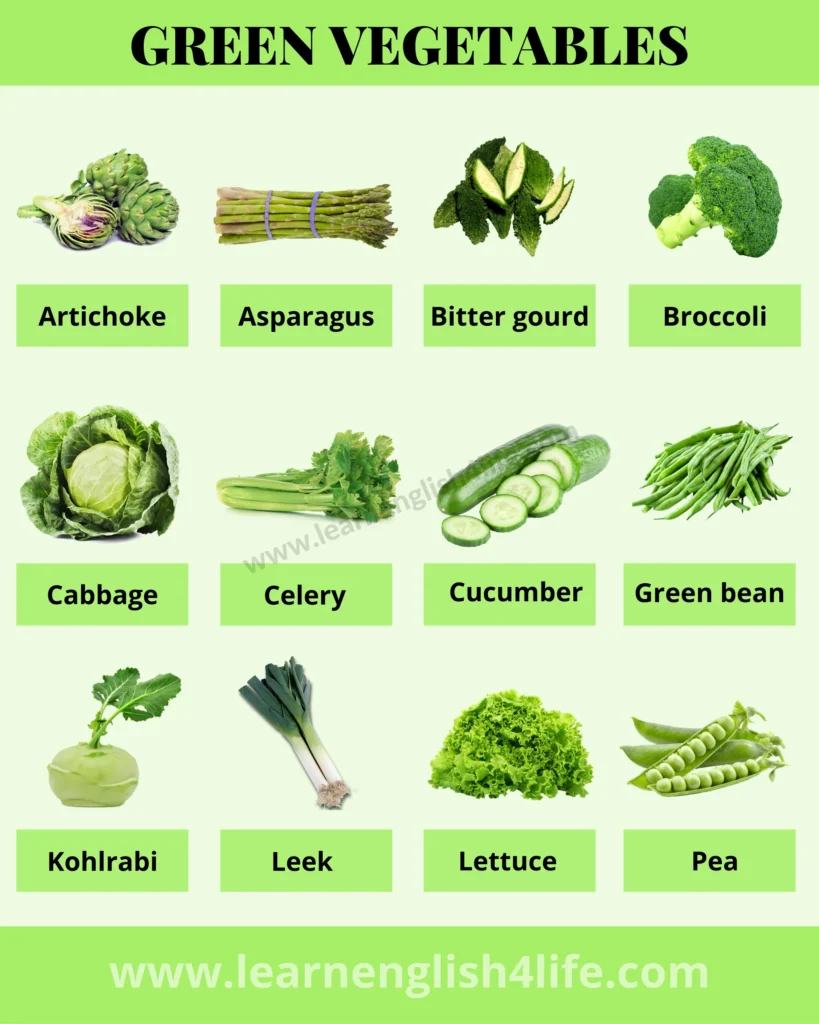
Vegetables in English: picture chart
Use this chart to review vegetable names. Cover the words and try to name each vegetable.
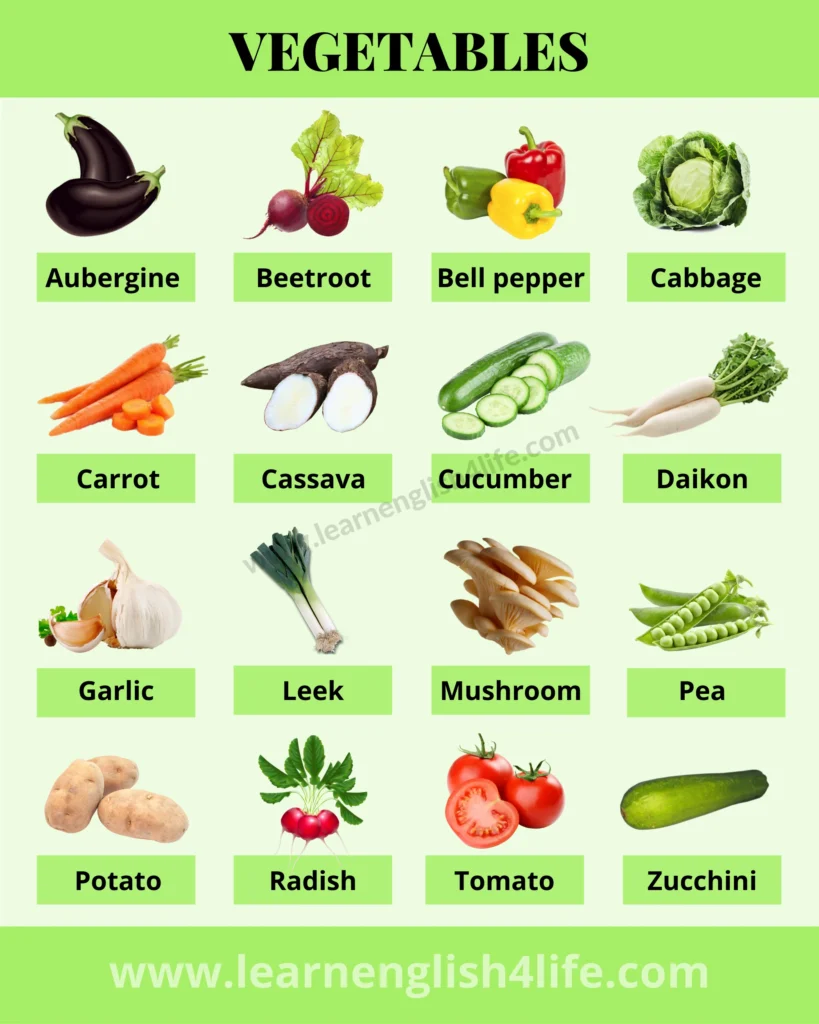
What are the British and American names for vegetables?
Several vegetables have one name in British English and another in American English. Both are correct, but use one style in the same piece of writing.
| British English | American English |
|---|---|
| aubergine | eggplant |
| courgette | zucchini |
| rocket | arugula |
| coriander (leaves) | cilantro |
| beetroot | beet |
| spring onion | scallion or green onion |
| pepper | bell pepper |
| vine leaves | grape leaves |
How can you learn vegetable names quickly?
Tip
Learn vegetables in the kitchen or at the market. Each time you shop or cook, say the English name of every vegetable you touch, and write your shopping list in English.
To hear how each name is pronounced, look it up in the Cambridge English Dictionary, or explore more words in the Cambridge Dictionary list of vegetable types.
Continue with our lessons on fruit names in English and animal names in English, learn the 100 most commonly used words in English, or save new words in our English Word Bank.
Summary
- Vegetables can be grouped into fruit, root, leafy and green vegetables.
- Tomatoes, cucumbers and pumpkins are fruits in science but vegetables in cooking.
- Some vegetables have different British and American names, such as aubergine and eggplant.
- Words such as spinach and garlic are usually uncountable.
Frequently asked questions
Is a tomato a fruit or a vegetable?
In science, a tomato is a fruit because it grows from a flower and has seeds. In cooking and shopping, people treat it as a vegetable.
What is aubergine called in American English?
Americans call it eggplant. In South Asian English, many people also call it brinjal.
What is a drumstick vegetable?
A drumstick is the long, thin pod of the moringa tree. People in South Asia often cook it in curries and soups.
Is garlic a root vegetable?
Garlic is a bulb, not a true root. Cooks usually group it with root vegetables such as onions and shallots.
Is “vegetable” countable?
Yes. We say a vegetable and vegetables: “Eat more vegetables.” Some vegetable names, such as spinach, are uncountable.