Present continuous tense
Learn the present continuous tense (am, is, are + -ing) for actions happening now, around now and future plans, with negatives, questions and quizzes.
In this lesson
The present continuous tense, also called the present progressive, describes actions happening now, actions happening around now and planned future arrangements. We form it with am, is or are plus the -ing form of the verb: She is studying now. I am watching a film tonight. Negatives add not, and questions start with am, is or are.
Key point
Present continuous = am, is or are + verb-ing. Use it for actions in progress now or around now, and for future plans that are already arranged.
How do you form the present continuous tense?
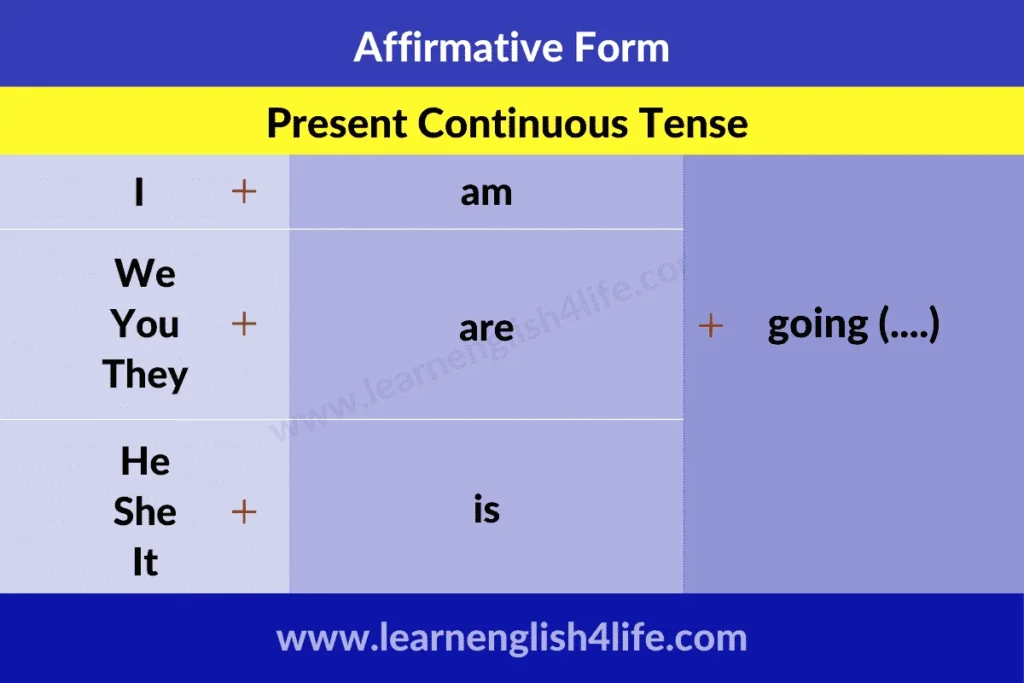
The present continuous has two parts: the present form of the verb ‘be’ (am, is, are) and the main verb with -ing.
| Form | Structure | Example |
|---|---|---|
| Positive | Subject + am, is or are + verb-ing | She is reading a book. |
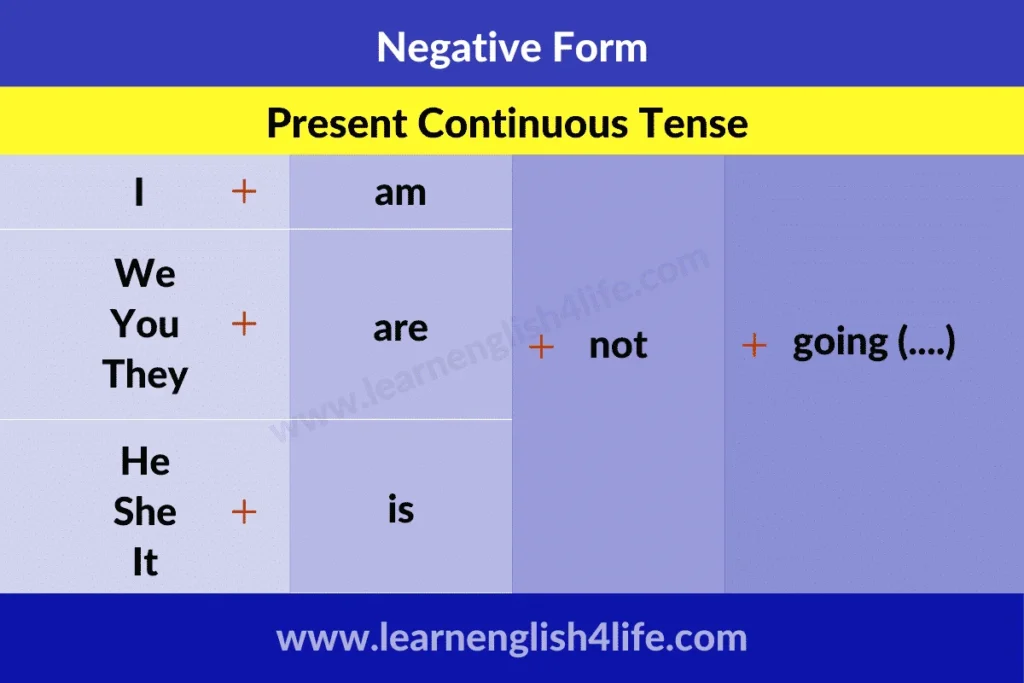
| Negative | Subject + am, is or are + not + verb-ing | She is not (isn’t) reading a book. |
| Question | Am, Is or Are + subject + verb-ing? | Is she reading a book? |
| Short answer | Yes or No + subject + am, is or are (+ not) | Yes, she is. / No, she isn’t. |
Tip
Remember the two parts: a form of be + -ing. If one part is missing, the sentence is wrong. She reading and She is read are both incomplete.
When do you use the present continuous tense?
1. An activity happening now
Use it for something happening at the moment of speaking.
Examples
- I am eating an ice cream.
- She is studying now.
2. An activity happening around now
Use it for something happening in this period of time, but perhaps not at the exact moment of speaking.
Examples
- She is following an English course.
- I am studying French at university.
3. A planned future arrangement
Use it for a future plan that is already fixed, usually with a time word.
Examples
- I am doing my final exams at the end of this month.
- I am watching a film tonight.
You can compare this use with other ways of talking about the future in the simple future tense lesson and in the British Council guide to will, be going to and the present continuous.
Time expressions
For now and around now: now, right now, at the moment, today, this week, these days. For future plans: tonight, tomorrow, next week, at the end of this month.
How do you make positive sentences?
Use subject + am, is or are + verb-ing. In speaking we often use short forms: I’m eating, she’s reading, they’re learning.
Spelling of the -ing form
| Verb | Rule | Example |
|---|---|---|
| Most verbs | add -ing | eat → eating, read → reading |
| Ending in -e | drop the e, add -ing | dance → dancing, write → writing |
| Short verb: consonant + vowel + consonant | double the last letter | swim → swimming, plan → planning |
| Ending in -ie | change ie to y, add -ing | lie → lying, die → dying |
Examples
- I am eating an apple.
- I am doing my homework.
- I am talking to my teacher.
- She is reading a book.
- He is climbing a tree.
- It is raining now.
- The baby is crying for milk.
- We are playing.
- The girls are dancing to a beautiful song.
- They are learning Spanish.
How do you make the negative?
To make a negative sentence, add not after am, is or are, before the -ing form of the main verb. The short forms are I’m not, isn’t and aren’t.
Examples
- I am not cleaning the room.
- She is not studying.
- She is not singing.
- She is not pretending.
- He is not writing a letter.
- Edward is not watching TV now.
- Anne is not having her lunch.
- It is not raining now.
- You are not reading the notes.
- They are not organising the party.
Common mistake
She not studying. → She is not studying.
How do you ask questions in the present continuous?
We use the question form to ask about actions that are happening at the current moment. Put am, is or are before the subject: Am, Is or Are + subject + verb-ing?
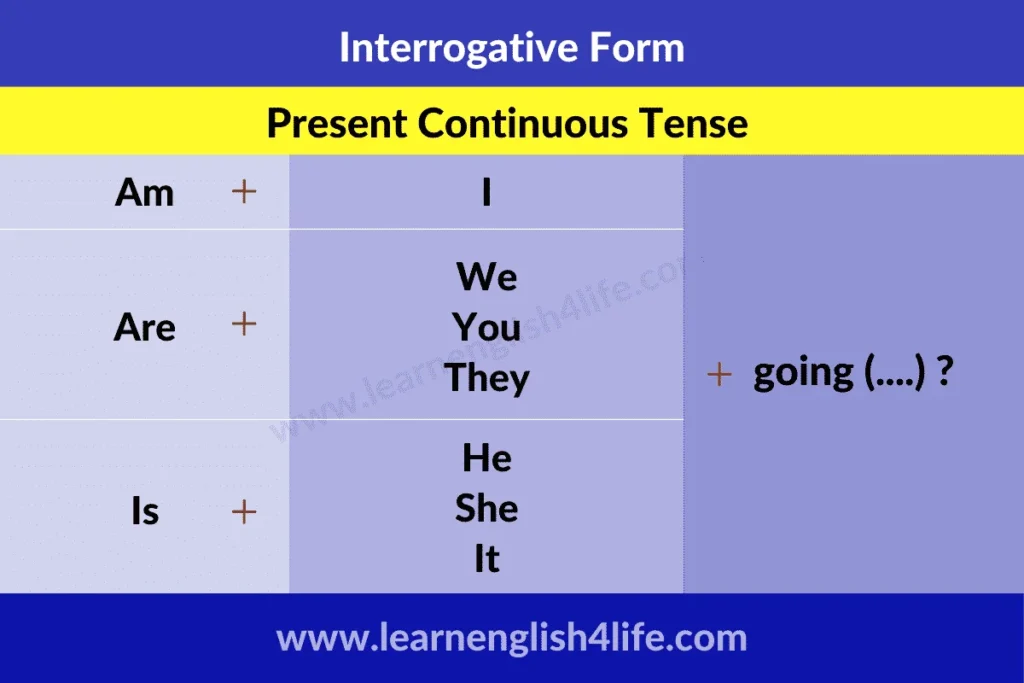
Examples
- Am I working?
- Is she swimming?
- Are they fighting?
- Is your mother cooking?
- Are those dogs barking?
With a question word, put it first: What are you doing? Where is she going?
Short answers
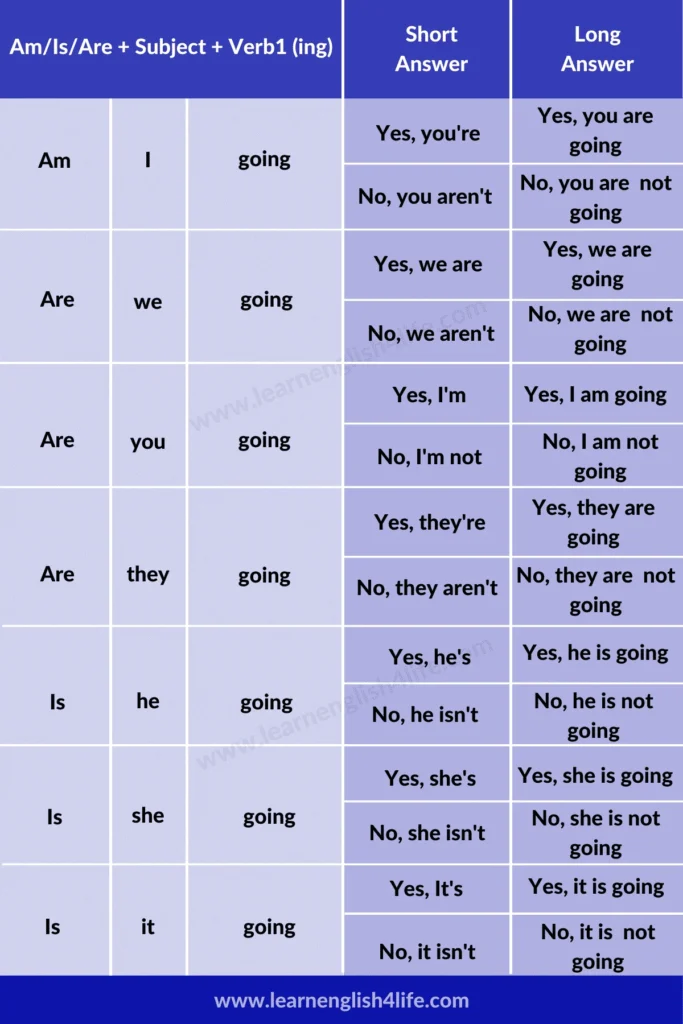
Examples
- Is it raining now? Yes, it is. / No, it isn’t.
- Are you studying? Yes, I am. / No, I’m not.
Common mistake
Is she swim? → Is she swimming?
Present continuous or simple present?
Use the simple present tense for habits and facts, and the present continuous for actions in progress: She goes to school every day, but She is going to school now. When you talk about an action in progress in the past, use the past continuous tense (She was studying).
Note
Some verbs describe states, not actions, and we do not usually use them in the continuous form. Examples are know, like, want, need and believe: say I know the answer, not I am knowing the answer.
For more examples and exercises, read the British Council grammar reference on the present continuous.
Summary
- Form: am, is or are + verb-ing (She is reading).
- Use it for actions now, actions around now and fixed future plans.
- Negative: add not after am, is or are (They aren’t playing).
- Question: put am, is or are before the subject (Are you working?).
- Common time words: now, at the moment, today, this week, tonight.
Frequently asked questions
What is another name for the present continuous tense?
It is also called the present progressive tense. Both names mean the same thing: an action that is in progress.
Can I use the present continuous for the future?
Yes, for plans that are already arranged, usually with a time word: I am watching a film tonight. We are meeting at six tomorrow.
Why is “I am knowing” wrong?
Know is a state verb, not an action, so we use the simple present: I know. Other state verbs are like, want, need and believe.
How do I spell swim, write and lie with -ing?
Double the last letter in swimming, drop the e in writing, and change ie to y in lying. Most other verbs just add -ing.
What is the difference between “She works” and “She is working”?
She works describes a habit or a fact about her job. She is working describes what she is doing now or around now.
Practise this lesson
5 questions
5 questions
5 questions
5 questions